
 中文
中文 English
PET deep blue masterbatch
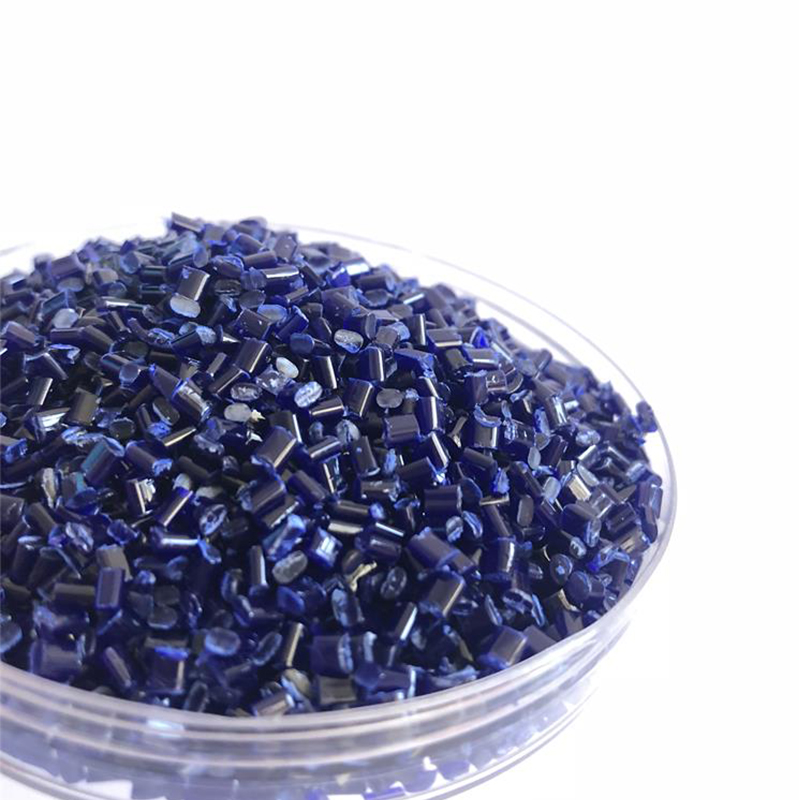


PET deep blue masterbatch
Color Masterbatch Customizable full color spectrum with saturated hues and anti-migration performance. Compatible with multiple carriers such as PE, PP, PET, PA and ABS, covering all processing scenarios of injection molding, film blowing and spinning.
Target clients: Daily necessities factories, toy manufacturers, auto parts plants, chemical fiber processors.
Target clients: Daily necessities factories, toy manufacturers, auto parts plants, chemical fiber processors.
shared:
INTRODUCE
PET plastic is the abbreviation for Polyethylene Terephthalate in English, abbreviated as PET or PETP. Its Chinese name is polybutylene terephthalate plastics, mainly including polyethylene terephthalate (PET) and polybutylene terephthalate (PBT). Polyethylene terephthalate is also known as polyester resin. It is a condensation polymer of terephthalic acid and ethylene glycol, collectively referred to as thermoplastic polyester or saturated polyester together with PBT.
PERFORMANCE
(1) General performance: PET resin is a milky white semi-transparent or colorless transparent solid, with a relative density of 1.38 and a light transmittance of 90%. PET is a medium barrier material, with an oxygen (O₂) permeability coefficient of 50–90 cm³·mm/(m²·d·MPa) and a carbon dioxide (CO₂) permeability coefficient of 180 cm³·mm/(m²·d·MPa). The water absorption rate of PET is 0.6%, indicating relatively high water absorption.
(2) Mechanical properties: The tensile strength of PET film is comparable to that of aluminum foil, 9 times that of HDPE film and 3 times that of PC and PA films. Reinforced PET has low creep, excellent fatigue resistance (better than reinforced PC and PA), as well as good wear resistance and friction resistance. The mechanical properties of PET are less affected by temperature changes.
(3) Thermal properties: Pure PET plastic has moderate heat resistance, which is significantly improved after reinforcement treatment. Its mechanical properties at 180℃ are better than those of PF laminates, making it one of the heat-resistant varieties with good performance among reinforced thermoplastic engineering plastics. PET has good heat aging resistance, with a brittleness temperature of -70℃, and still retains certain toughness at -30℃. PET is not easy to burn, with a yellow flame and molten dripping during combustion.
(4) Electrical properties: Although PET is a polar polymer, it has excellent electrical insulation, which can be well maintained even at high frequencies. PET has poor corona resistance and cannot be used for high-voltage insulation. Its electrical insulation is affected by temperature and humidity, with humidity having a more significant impact.
(5) Environmental properties: PET contains ester bonds and is not resistant to water, acid, and alkali corrosion under high temperature and water vapor conditions. PET is stable to organic solvents such as acetone, benzene, toluene, trichloroethane, carbon tetrachloride and oils, and also has high resistance to some oxidants such as hydrogen peroxide, sodium hypochlorite and potassium dichromate. PET has excellent weather resistance and can be used
outdoors for a long time.
The main products operated by the company are:
Black polyester (PET) color masterbatch, polyester (PET) titanium dioxide masterbatch, various colored polyester (PET)
color masterbatches.
Characteristics and Applications of Polyester (PET) Series Color Masterbatch:
Polyester (PET) series color masterbatch has the advantages of high concentration, good dispersibility, strong tinting strength and reduced coloring cost, and is widely used in filament, staple fiber, non-woven fabric and other fields.
Instructions for use:
In practical spinning applications, the addition ratio of masterbatch and spinning processing technology can be adjusted according to different monofilament fineness, filament shape and chip properties (including bright or matte types). Polyester color masterbatch has strong moisture absorption, so we recommend pre-drying it before use. Due to the low softening point of the masterbatch, which is prone to agglomeration, if the drying equipment does not have a pre-crystallization system, the drying temperature should not be too high, generally controlled between 80℃ and 120℃ with a drying time of about 2 hours. The spinning temperature should be 3℃–5℃ lower than that of conventional filaments with the same fineness, to avoid excessive moisture entering the melt and affecting processing quality.
Packaging and storage:
The product is packaged in double-layer paper-plastic composite bags, with a standard specification of 25 kg/bag. Please store it in a well-ventilated and dry place, with padding underneath to avoid direct sunlight and rain. After opening the package for use, the remaining products should be resealed to prevent dust pollution and moisture absorption.

Previous:
PE red masterbatch
Next:
PE white masterbatch